
Every patient, every signal, in the hand that rounds on them.
A clinical mobile companion for neurologists that surfaces overnight breaches, AI-curated briefs and live vitals so a physician walks into every room already knowing what changed and what to do about it.
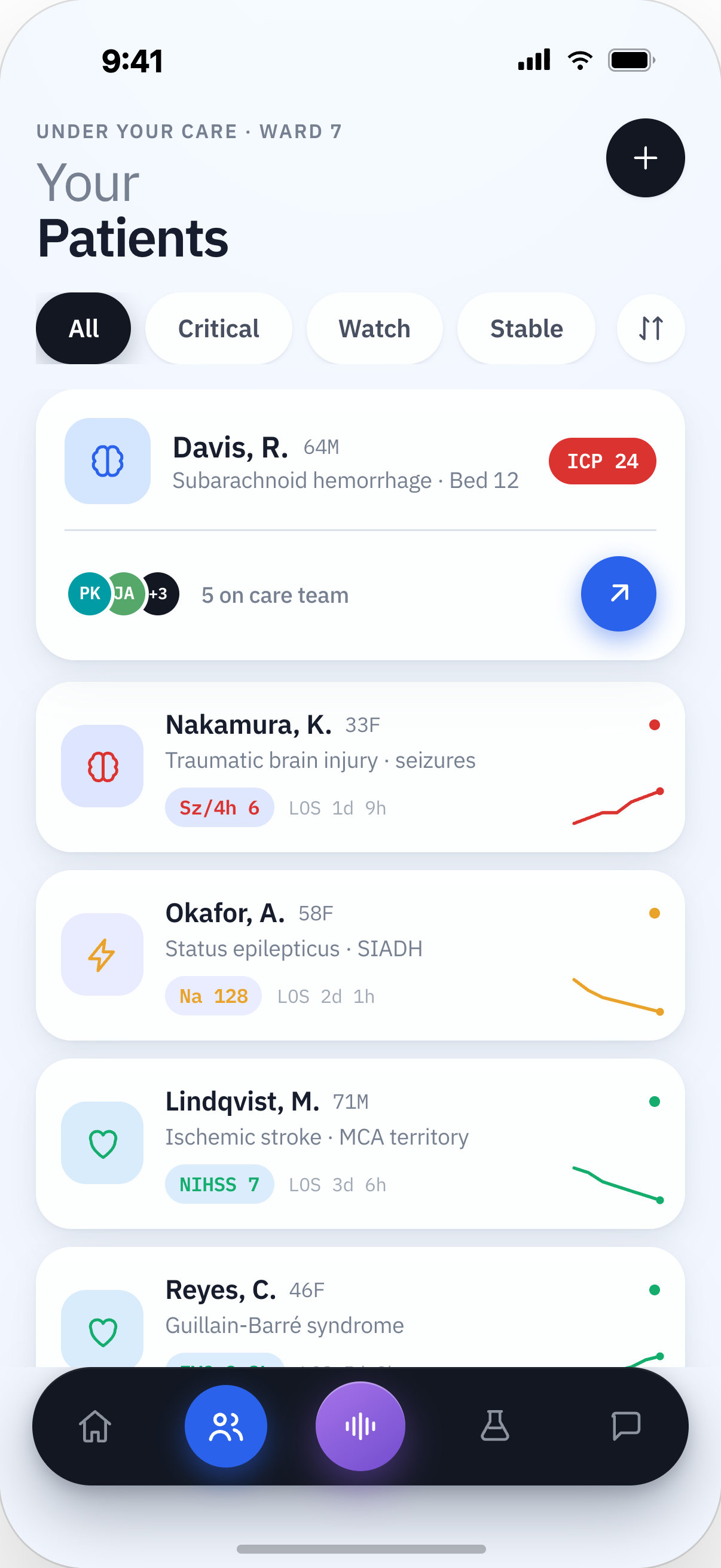
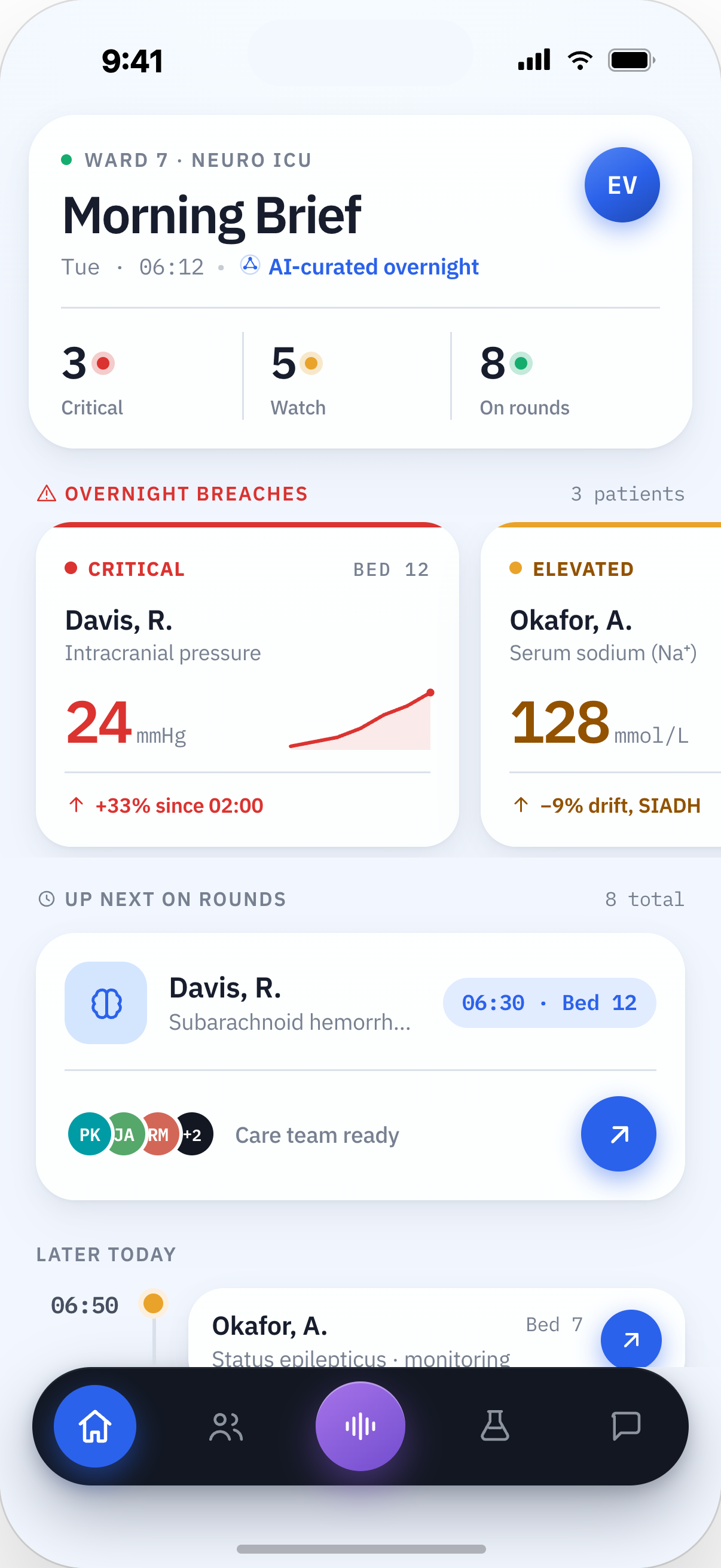
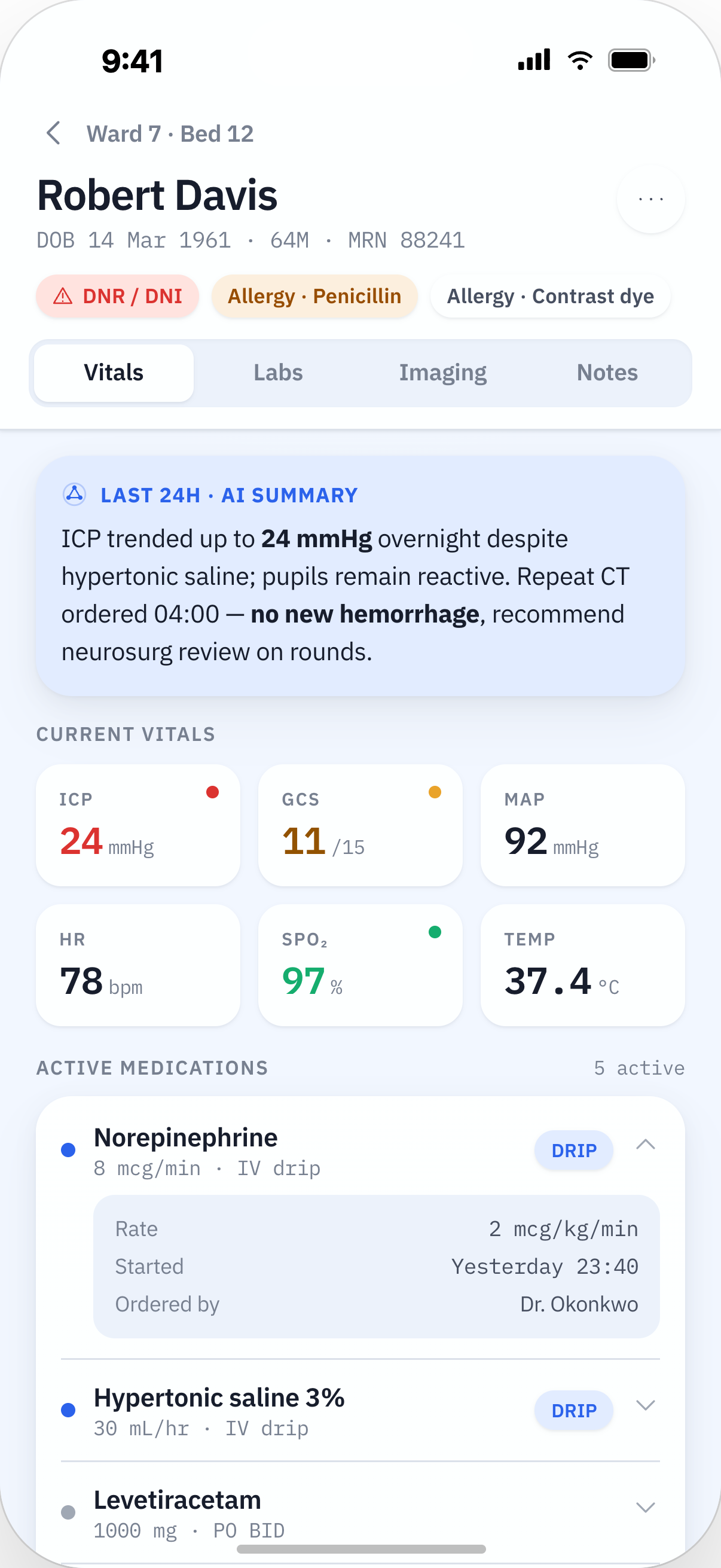
A neurologist rounds on 8–12 patients each morning. By the time they reach bed 4, the night team's handoff is already outdated. Overnight vitals drift. New labs arrive. Critical flags go unread in a separate system.
The patient changed overnight. The physician shouldn't have to piece that together at the bedside.
Build a clinical companion that makes the right information arrive before the physician reaches the bed AI-curated, signal-sorted, with vitals, imaging, labs and team communication in one hand-held workspace that is always ready in under a second.
Outcomes & process
Shadow the round
We followed attending neurologists through morning rounds to map the fragmented information trail from handoff to bedside decision.
Reframe to briefing
We reframed the task from "access the chart" to "receive the brief" AI pre-digests what changed, so the physician confirms rather than searches.
Design for one hand
Every screen was pressure-tested for thumb reach, glove use and the reality that one hand holds a phone while the other holds a patient's wrist.
Systematise
A component library and signal-severity language documented for engineering, extensible to cardiology, oncology and other wards.
From brief to bedside,
one unbroken flow
The morning brief, patient list, smart chart and imaging viewer are a single continuous journey tap any signal to go deeper without ever losing your place.
Ask the chart anything, mid-round
Hold the mic button, ask a clinical question in plain English, and get a sourced AI answer with a follow-up card imaging, labs, or discharge without unlocking a keyboard or navigating a menu.
Notifications that know what matters
Critical alerts, new lab results, care-team messages and consult acceptances filtered by clinical urgency, not time, with one-tap drill-down to the source patient or result.
The EHR had the data. The problem was that the data lived in a system that required a desk, a login, and five minutes the physician didn't have at the bedside. The phone changed that.
Before
Physicians arrived at the bedside having read a static handoff note written hours earlier, without knowing what changed overnight.
Signal
Synapse delivers a live, AI-curated brief that reads every change since the last round and surfaces only what needs a clinical decision today.
Confidence
Every answer is sourced AI findings link to the raw vitals, imaging slice, or lab draw they came from, so the physician confirms rather than assumes.
Inside Synapse
Step through the screens a neurologist moves through on a morning round.
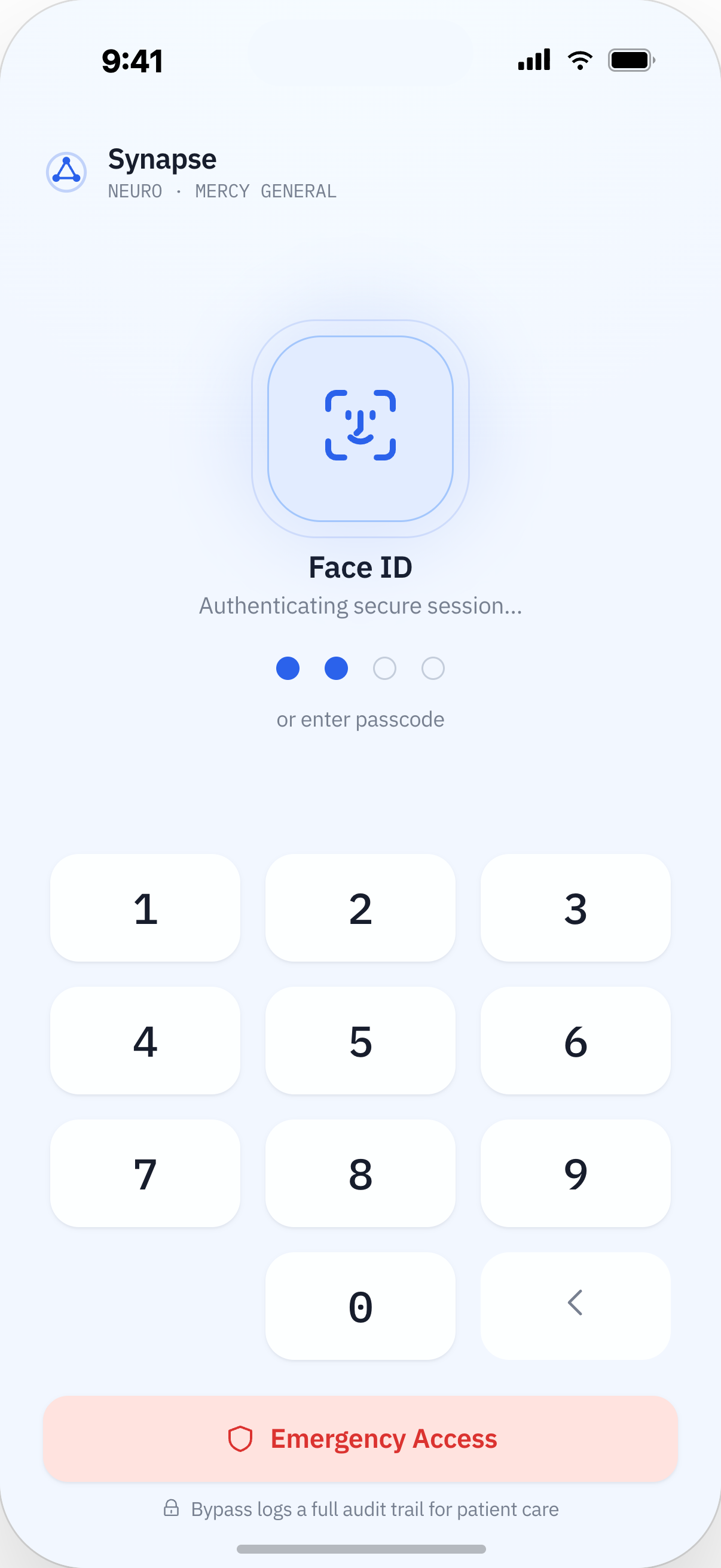
Biometric gate: Face ID with passcode fallback and emergency access mode with a full audit trail.
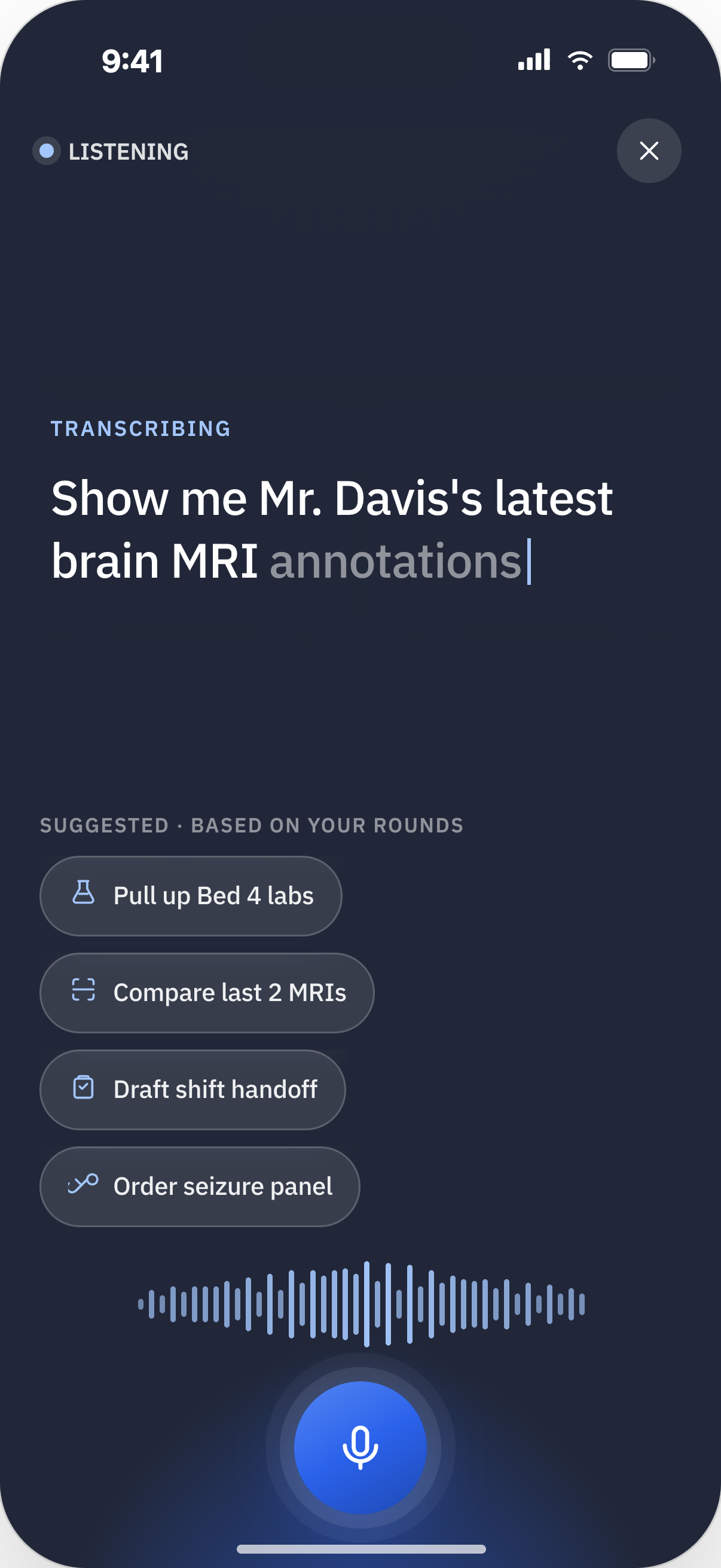
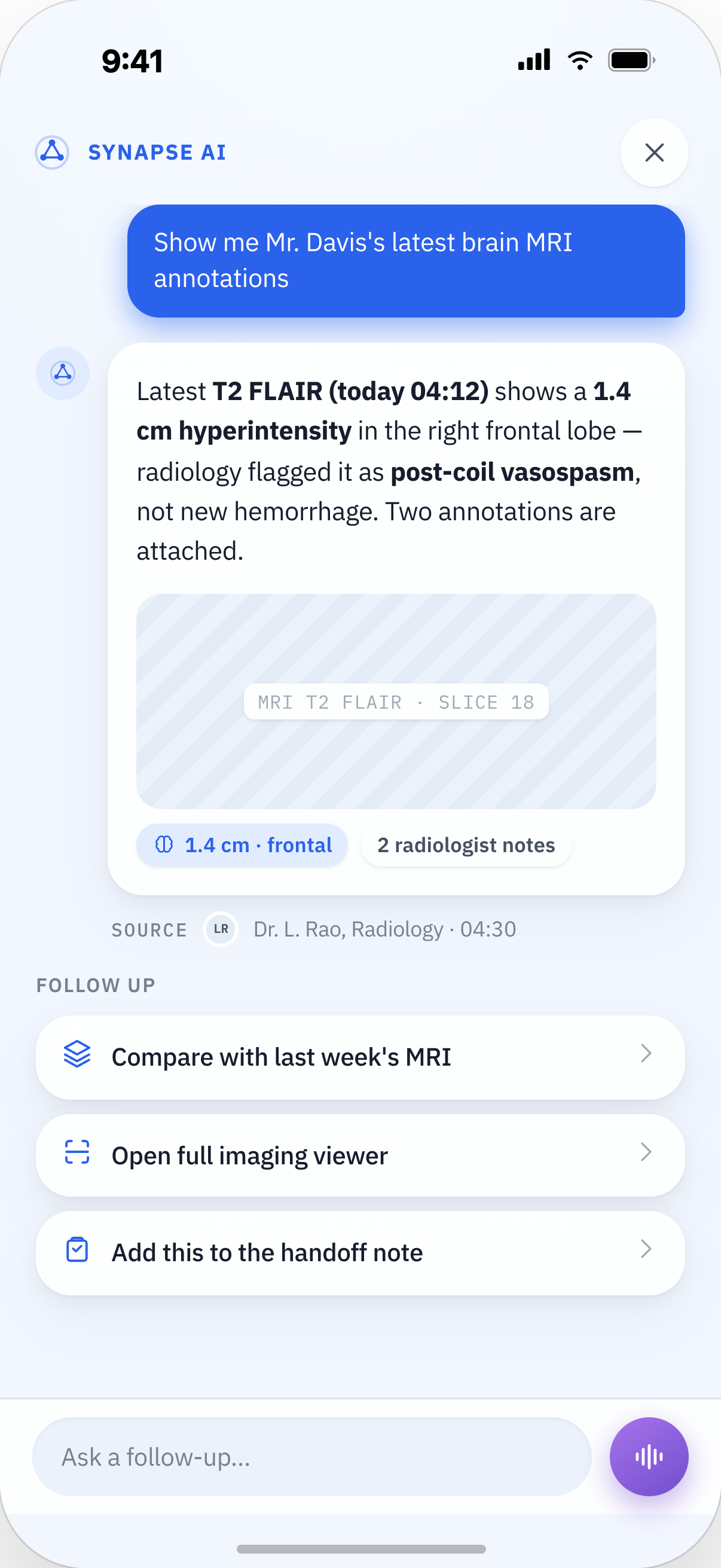
Voice query then sourced answer: ask the chart a question mid-round, get an AI response with an embedded imaging thumbnail, annotation metadata and follow-up actions all without leaving the phone.
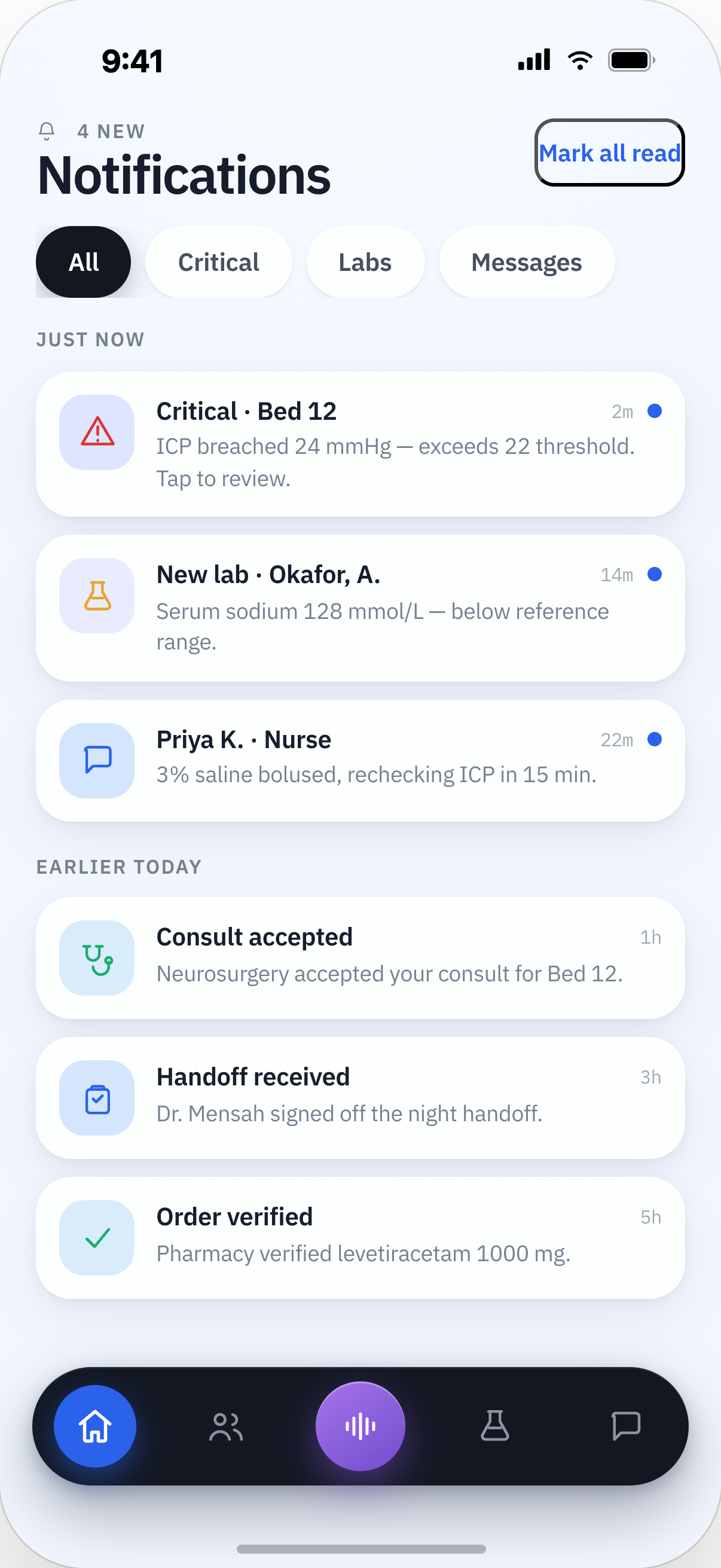
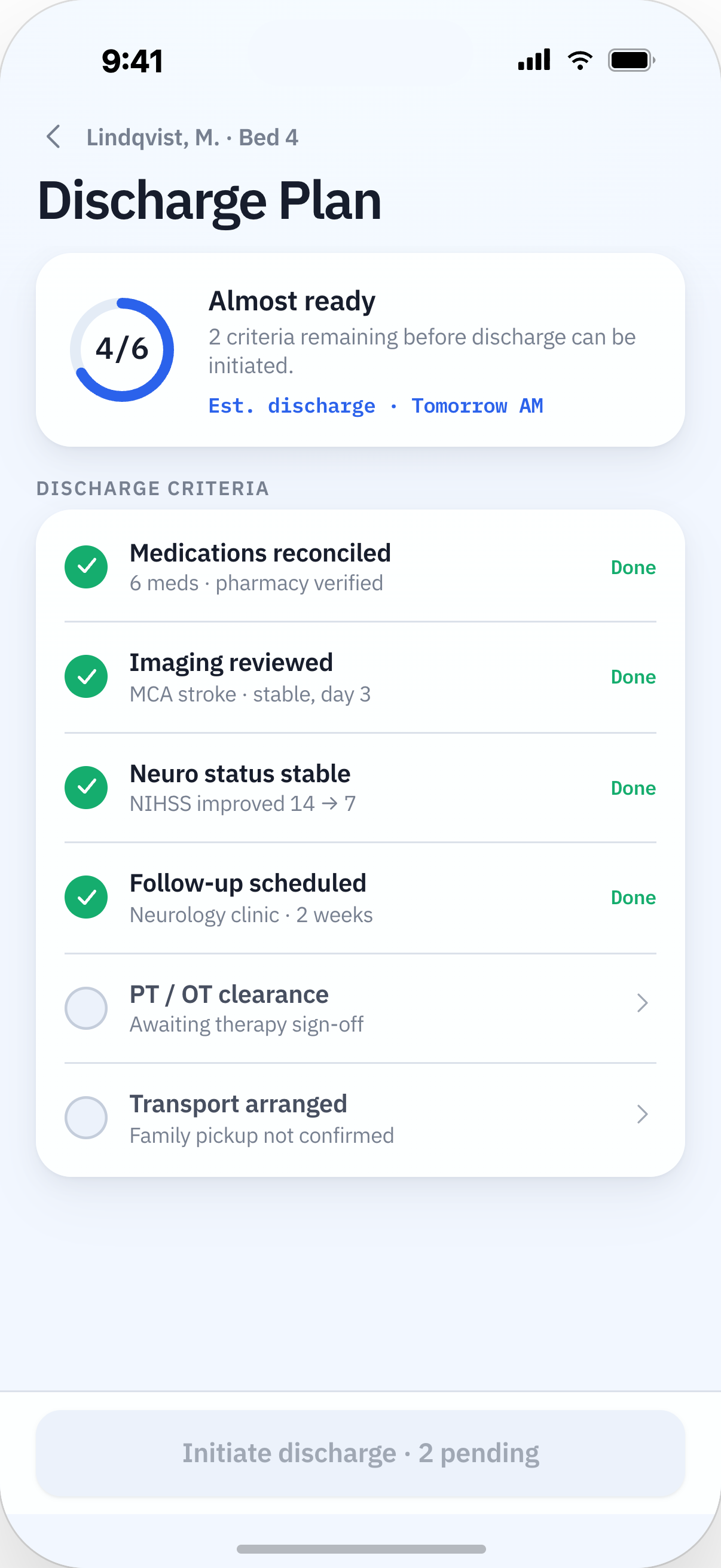
Notifications filtered by clinical urgency critical alerts, labs, consult updates, team messages and a discharge plan checklist that tracks outstanding criteria with a live progress ring and estimated date.
The foundations behind the app
Colour, type, iconography and clinical-severity patterns designed to pass an accessibility audit and hold up in a bright ward under time pressure.
Blue-white app background for long-shift readability. Blue for AI and primary actions. Red, amber, green reserved exclusively for clinical severity never decorative.
Large numerics for vitals, readable at arm's length. SF Pro for native feel. Weight hierarchy: regular for context, semibold for values, bold for alerts.
Every interactive element meets 44px minimum. Critical-action buttons are 52px. Designed for gloved hands and one-thumb reach in a portrait hold.
Every smear, reviewed in minutes.
 ↗
↗